
EDITORIAL 03
How to Build a Private Wine Cellar
Wine Cellar Organisation
A private wine cellar should reflect the person who will actually drink the wines. Building one effectively begins with understanding personal taste rather than simply collecting recognised labels.
The first questions are practical. What styles of wine are enjoyed most often? Is the cellar intended mainly for everyday drinking, entertaining, special occasions or long-term ageing? How many bottles are realistically consumed each year?
These answers help determine the balance of the collection. Some clients may want a cellar dominated by Bordeaux and Burgundy, while others may prefer Champagne, Rhône, Italy, Spain or wines from emerging regions. A useful cellar can combine familiar favourites with carefully chosen opportunities for discovery.
Drinking windows should also be considered. A cellar filled entirely with wines requiring ten or twenty years of ageing may be impressive but not especially useful. Including bottles for immediate drinking, medium-term enjoyment and longer-term development creates a more practical collection.
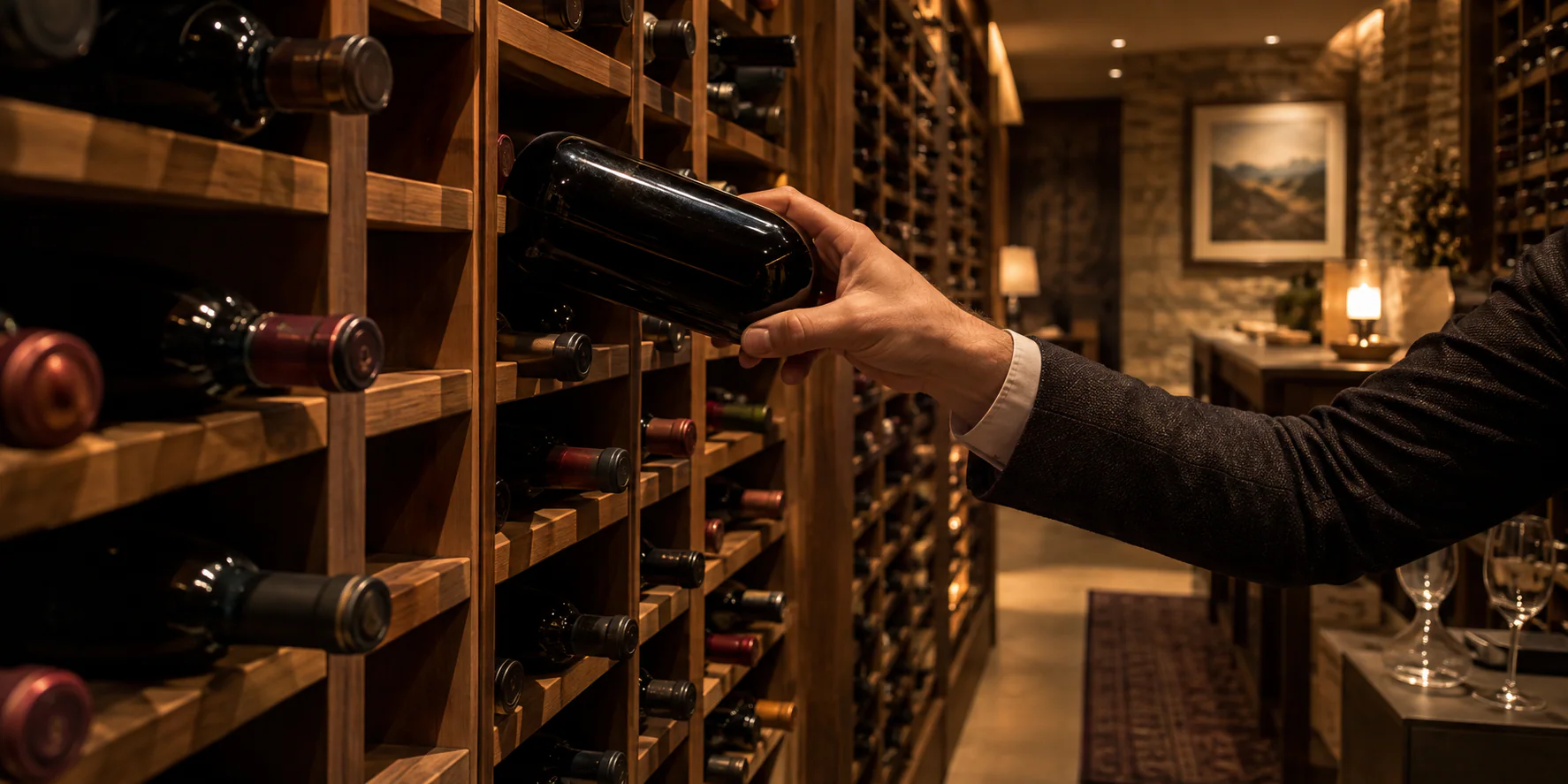
Storage conditions are fundamental. Stable temperature, appropriate humidity, minimal vibration and protection from light all contribute to maintaining wine in good condition.
Organisation becomes increasingly important as the collection grows. Clear inventory records, bottle locations, purchase information and drinking windows make it easier to understand what is available and when it should be enjoyed.
A well-planned cellar is therefore not simply a collection of valuable bottles. It is a personal wine library designed around taste, time and occasion.