
EDITORIAL 02
Why Wine Service Training Matters
Hospitality Wine Service
Wine service can influence how guests experience a restaurant long before they taste the wine itself. Staff do not need to become sommeliers overnight, but they should feel comfortable discussing the wines they serve.
Effective training begins with practical knowledge. Team members should understand the basic styles represented on the wine list, key grape varieties, important regions, service temperatures and basic food-pairing principles.
Equally important is communication. Guests approach wine with very different levels of knowledge. Some know exactly what they want; others may only know that they prefer something light, dry or full-bodied. Good service means listening first and translating the wine list into language that feels approachable.
Training can also improve consistency. When several members of a team describe the same wine in completely different ways, the guest experience becomes uneven. A shared vocabulary and clear service standards help create confidence across the team.
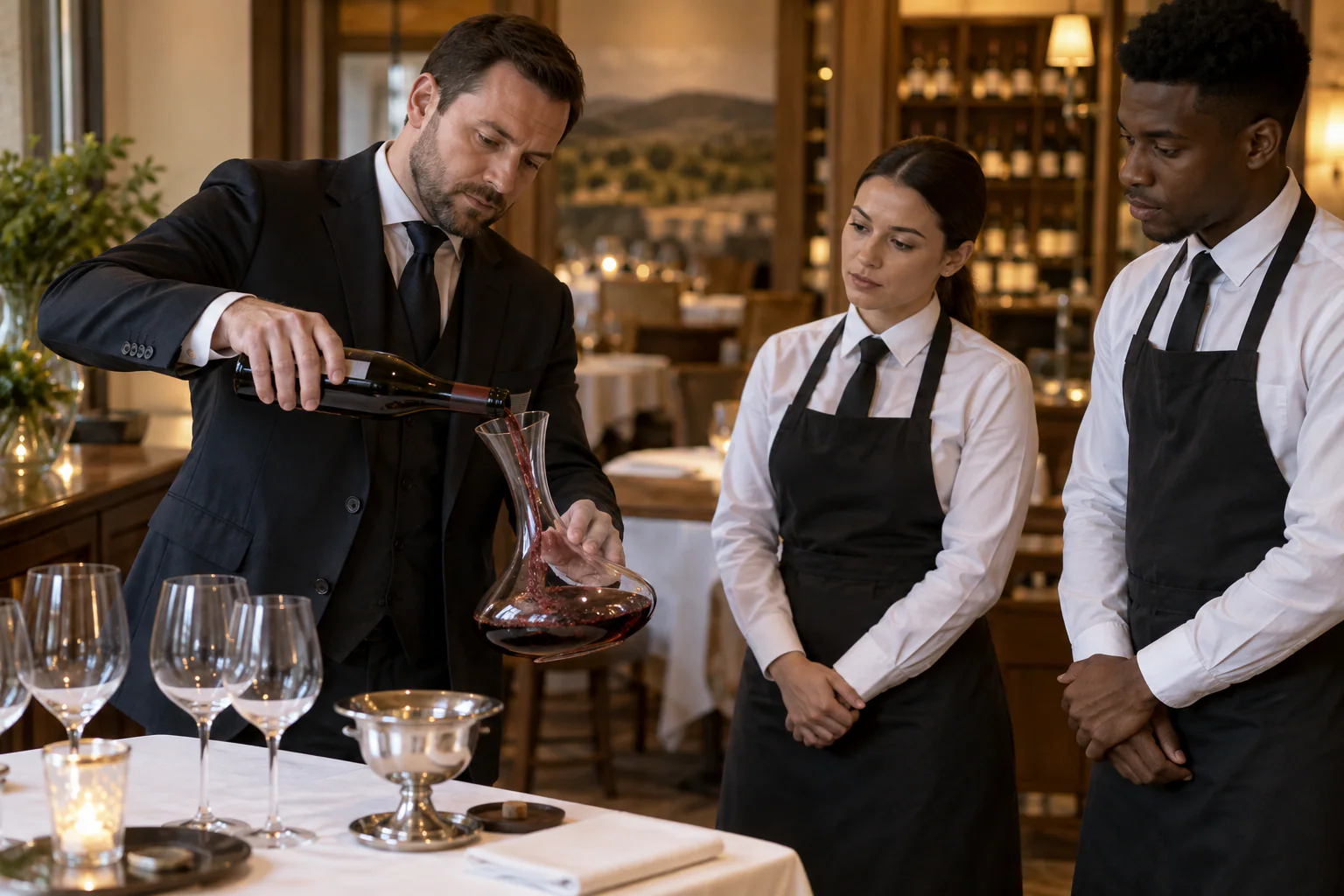
Practical exercises are often more useful than memorising large amounts of theory. Tasting wines together, discussing how they relate to the menu and practising guest conversations can make training easier to apply during service.
The goal is not to make service overly formal. It is to help staff provide clear, accurate and natural guidance so that wine becomes part of the hospitality experience rather than a source of uncertainty.